



Process Control
Process control turns a shot peening recipe into a reproducible production route. Explore Almen intensity and saturation curves, coverage, air and media flow, equipment configuration, monitoring, inspection, reaction plans and change control—without confusing process verification with acceptance of the component surface.
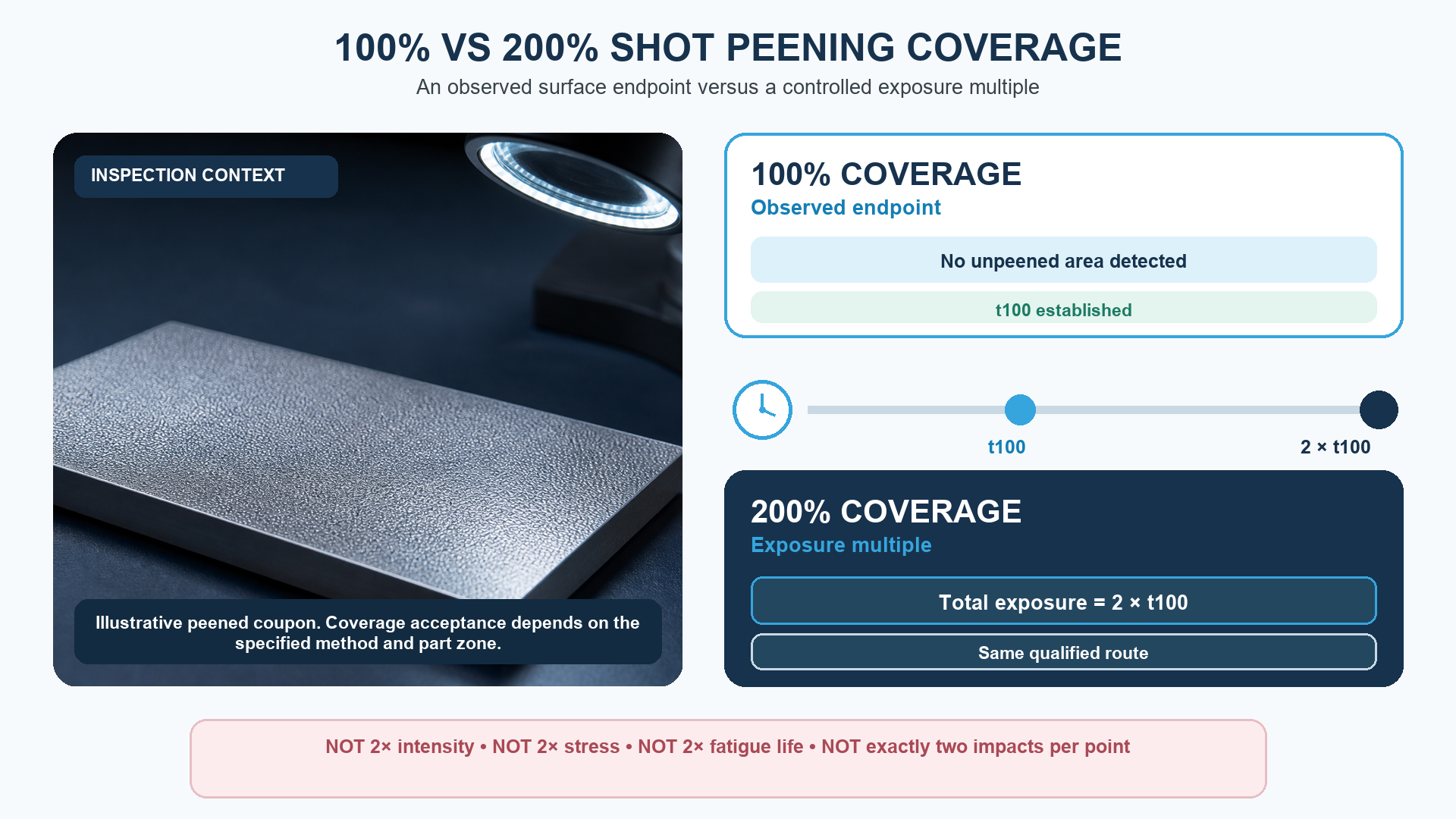
100% vs 200% Shot Peening Coverage
Learn what 100% and 200% coverage mean, how t100 exposure is established, and why coverage, Almen intensity and component acceptance require separate evidence.
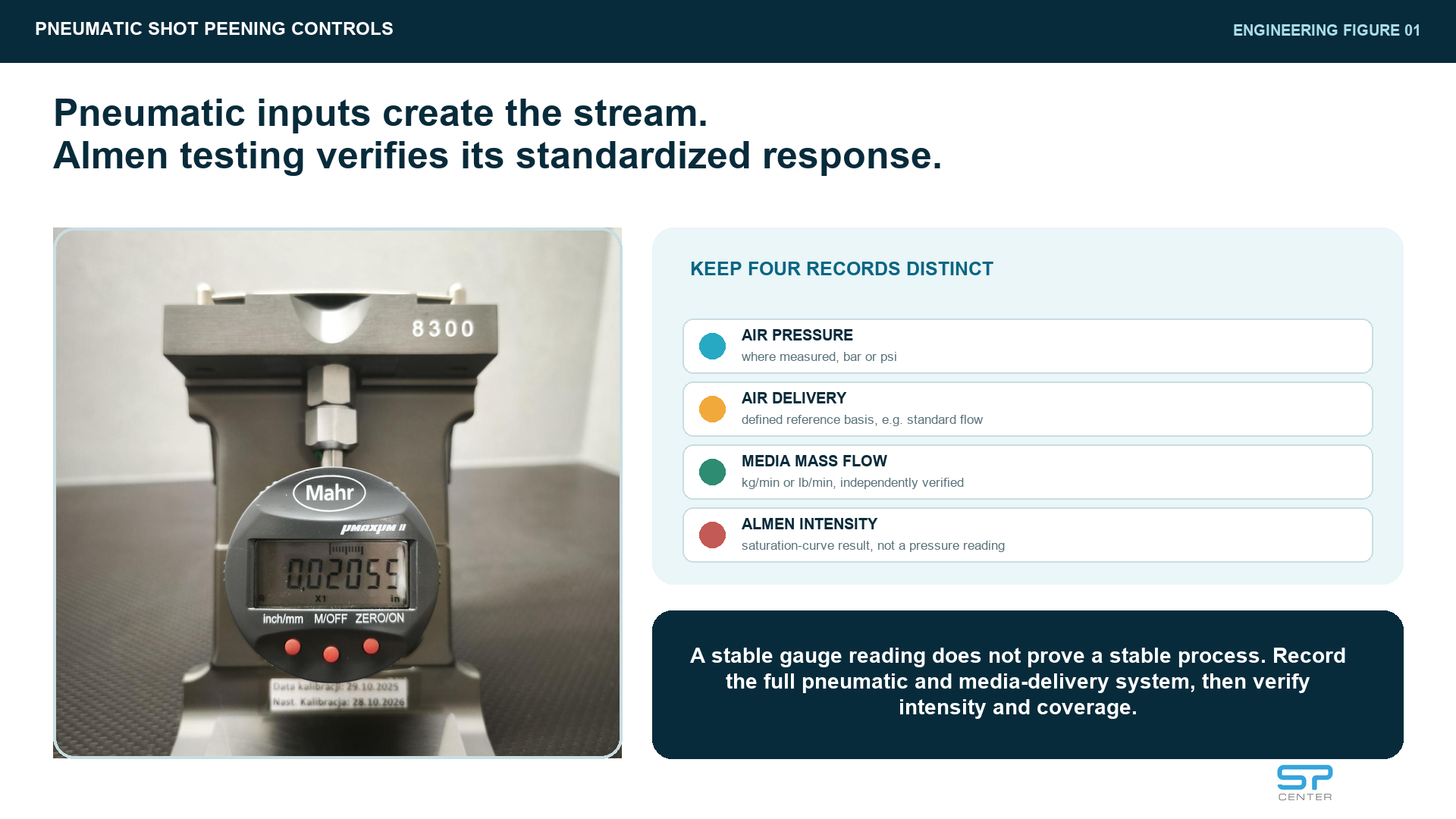
Air Pressure and Flow in Pneumatic Shot Peening
Learn how air pressure, air delivery, media mass flow, nozzle condition, monitoring and Almen verification form one qualified pneumatic shot peening configuration.
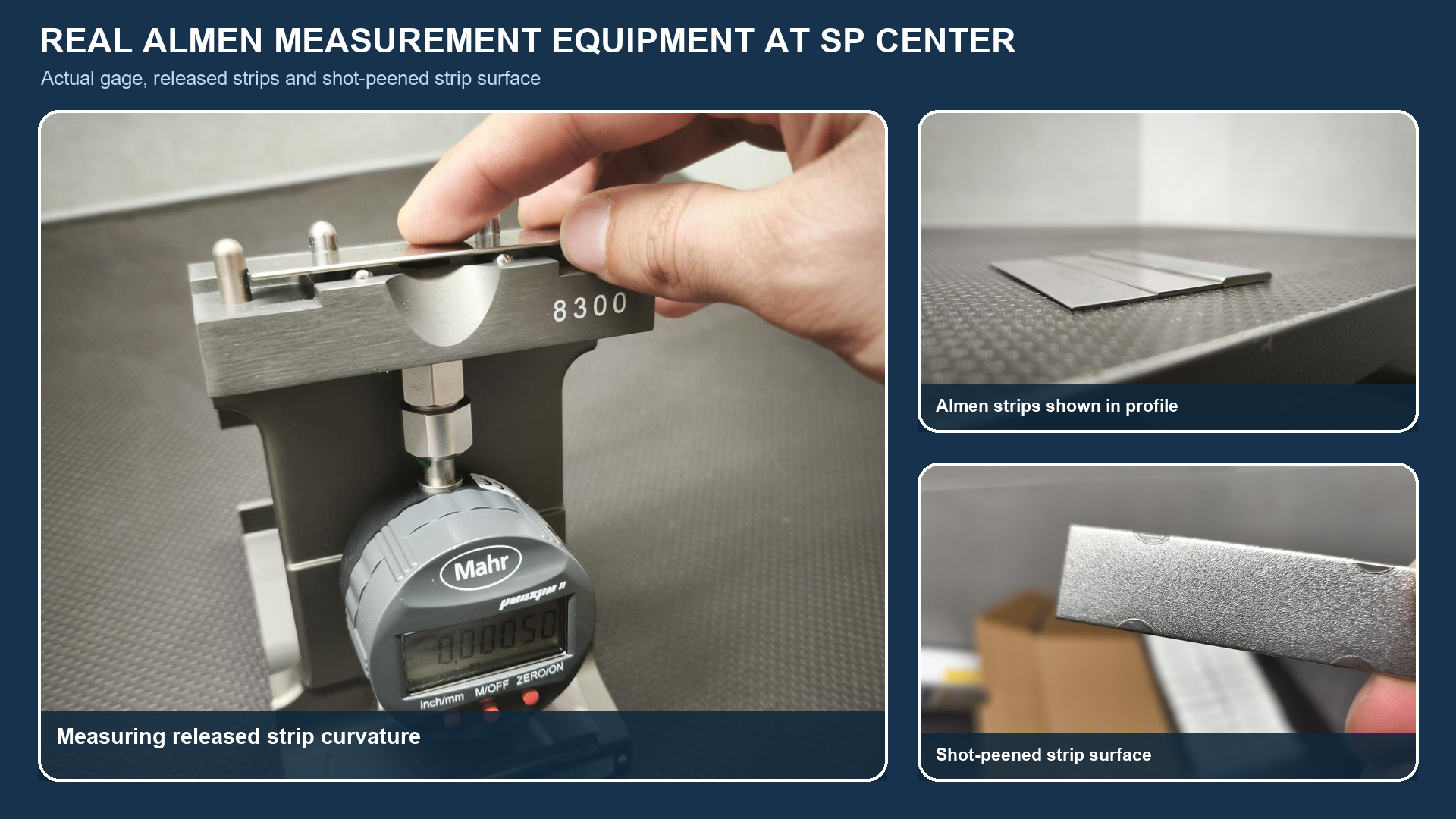
Almen Intensity in Shot Peening: Strips, Saturation and Verification
Learn how Almen strips, arc height and saturation curves establish peening intensity, how N, A and C notation works, and what production verification must control.
-
Exposure Time in Shot Peening: Coverage, Motion and Cycle Control
Learn how local dwell, traverse, rotation, passes and recovery rules establish shot peening exposure without confusing component coverage with Almen intensity or saturation.
-
How Shot Peening Machine Condition Affects Process Quality
Machine condition can shift media delivery, impact footprint, motion and monitoring. Learn what to inspect, trend and verify after shot peening maintenance.
-
Impact Angle in Shot Peening: Definition, Access and Qualification
Impact angle is a local relationship between particle trajectory and a stated surface reference. Qualify it with stand-off, fixture, motion, local flux, Almen intensity, feature coverage and surface acceptance.
-
Nozzle Distance in Shot Peening: Footprint, Coverage and Repeatability
Nozzle stand-off affects footprint, stream behaviour and access. Define its datum and tolerance, then qualify it with angle, motion, intensity and coverage.
-
Overpeening: When Excessive Shot Peening Damages a Component
Overpeening has no universal time limit. Control upper intensity, local exposure, media and cumulative cycles, then assess surface, dimensions and required performance.
-
SAE J2597: Computer-Generated Shot Peening Saturation Curves
SAE J2597 evaluates computer-generated saturation curves. Protect raw time and arc-height data, validate software and link every result to the tested configuration.
-
SAE J442 and J443: Tools and Procedures for Determining and Verifying Peening Intensity
Understand how SAE J442 measurement tools and SAE J443 intensity procedures work together, and why Almen verification remains separate from component coverage and validation.
-
Shot Peening Coverage Inspection: Visual Methods and Digital Image Analysis
Learn how to inspect shot peening coverage with controlled visual, tracer and digital methods while keeping component-surface acceptance separate from Almen intensity verification.
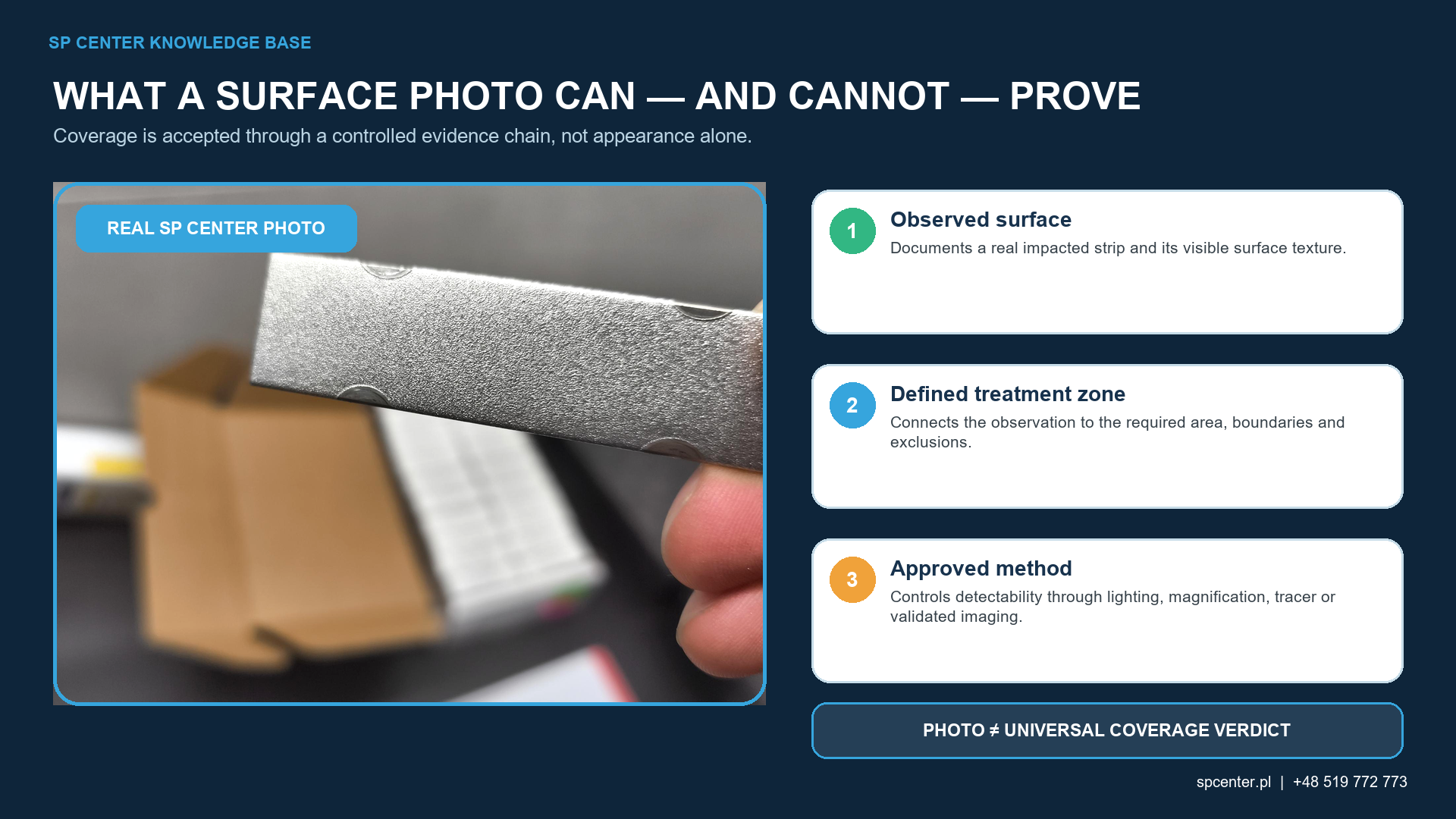
Shot Peening Coverage: Meaning, Inspection and Process Control
Understand 100%, 150% and 200% shot peening coverage, approved inspection methods, complex-geometry risks, qualified exposure, serial controls and the evidence boundaries between intensity, acceptance and validation.
-
Shot Peening Equipment: Systems, Controls and Qualification
Understand how shot peening equipment architecture, media control, motion, monitoring and qualification combine while equipment readiness remains separate from component acceptance.
-
Shot Peening Process Window: Defining and Validating Acceptable Parameters
Build a defensible shot peening process window by linking interacting inputs to intensity, coverage, component acceptance, measurement capability, boundary evidence and production change control.
-
Shot Peening Repeatability: What to Monitor in Every Production Batch
Control shot peening repeatability through job and lot identity, approved configuration, actual cycle data, operating media mix, intensity, coverage, component acceptance, alarms and traceable release.
-
Shot Peening Saturation Curve: Method, 2T Criterion and Interpretation
Learn how controlled Almen-strip exposures, curve evaluation and the 2T criterion determine peening intensity without confusing saturation time with component exposure.
-
Shot Velocity in Shot Peening: Energy, Intensity and Process Control
Shot velocity is a distribution generated by media, equipment and geometry—not a synonym for pressure, wheel speed or Almen intensity. Control the full acceleration system and verify component coverage and surface acceptance separately.
-
Underpeening: How to Diagnose Insufficient Shot Peening
Diagnose underpeening by separating low intensity, incomplete coverage, blocked access, interrupted cycles and weak inspection evidence before authorizing correction or release.